



As a creative, I love beautiful design. The perfect font, a stunning color palette, a seamless user interface—these are the elements that bring a brand’s story to life. But as a business owner, I love something even more: conversions.
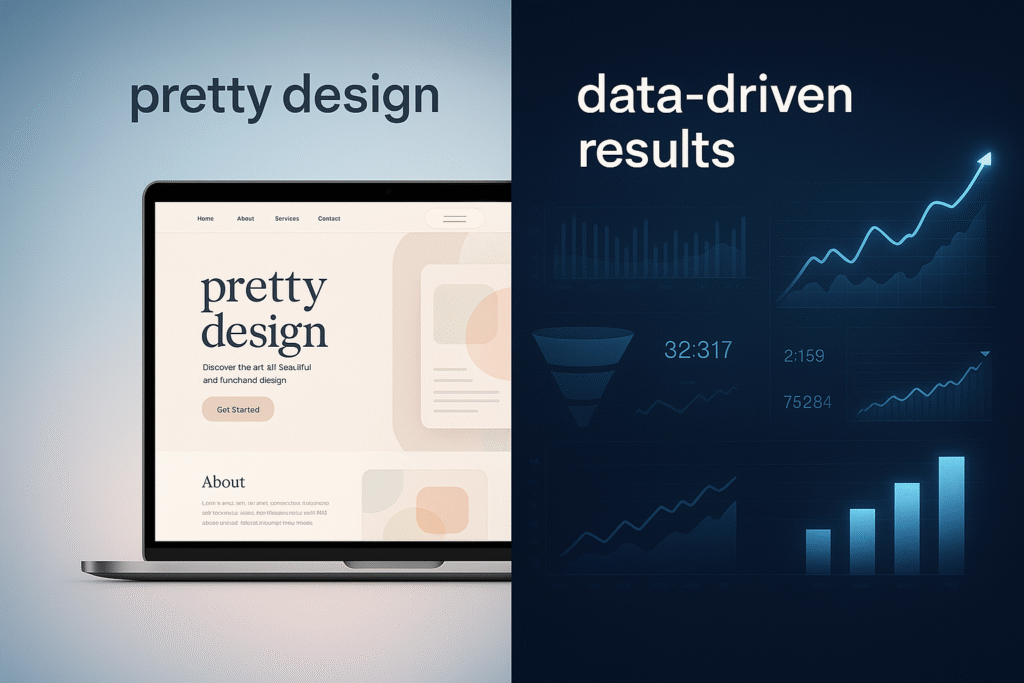
A stunning website that doesn’t attract clients, generate leads, or drive sales is just a pretty digital brochure. It might win design awards, but it won’t pay the bills. This is where the crucial balance between art and science, between UX/UI and analytics, comes into play.
From Digital Brochure to Growth Engine.
For years, businesses were told they just needed a “web presence.” The result was a flood of beautiful but static websites that acted as little more than online business cards. They looked professional, but they didn’t do anything. They were digital dead ends.
Today, a website must be the engine of your business—a dynamic, intelligent funnel that guides visitors on a journey from curiosity to conversion. It’s not just about aesthetics; it’s about architecture. When I build a website, whether on a platform like WordPress or another CMS, I’m not just thinking about how it looks. I’m architecting a digital ecosystem designed for growth.
This means every element has a purpose:
- User Experience (UX) & User Interface (UI): The design must be intuitive and engaging, making it easy for visitors to find what they need and take the desired action. A clean layout and compelling visuals are the entry point to the customer journey.
- Conversion Rate Optimization (CRO): This is where data takes the lead. By strategically placing calls-to-action (CTAs), optimizing landing pages, and streamlining forms, we turn passive visitors into active leads.
The Tools of the Trade: Building an Intelligent Funnel.
Creating a website that is both beautiful and effective requires a blend of creative vision and technical precision. It’s about using the right tools to not only build the site but also to measure its performance relentlessly.
Here’s a look at how I bridge that gap:
- The Foundation (WordPress & Elementor): I often use WordPress for its robust and scalable foundation. Paired with a powerful page builder like Elementor, it allows for the creation of highly customized, visually appealing designs without sacrificing performance. This combination gives us the creative freedom to build a unique brand experience.
- The Brain (Google Analytics): This is the most critical piece of the puzzle. A website without analytics is like flying blind. By integrating Google Analytics, we can track the entire user journey: Where are visitors coming from? Which pages are they lingering on? Where are they dropping off? This data is pure gold. It tells us exactly what’s working and what isn’t, allowing us to make informed decisions instead of guessing.
- The Feedback Loop (Data-Driven Iteration): The launch of a website isn’t the finish line; it’s the starting line. The data from Google Analytics provides a continuous feedback loop. If a page has a high bounce rate, we investigate why. If a CTA isn’t getting clicks, we test a new version. This iterative process of analyzing, testing, and optimizing is what transforms a good-looking site into a high-performing growth asset.
Beyond the Build: A Digital Ecosystem for Growth
Ultimately, a website should be your hardest-working employe, operating 24/7 to grow your business. It’s the central hub of your digital presence, connecting your social media, email marketing, and advertising efforts into a single, cohesive system.
So while I’ll always have a passion for beautiful design, my true focus is on building digital ecosystems that deliver measurable results. Because at the end of the day, pretty doesn’t pay the bills. Data does.